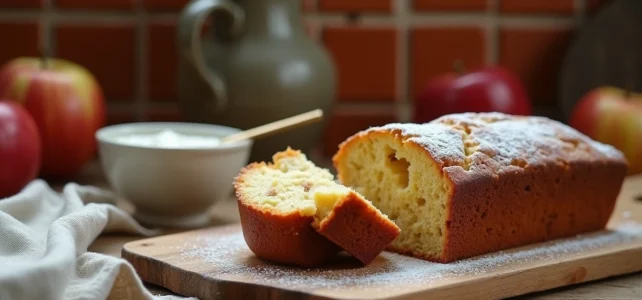
The apple yogurt cake in the style of Cyril Lignac is based on a recipe that everyone knows, but its success relies on a few technical details that are rarely explained. The yogurt pot serves both as a measure and a binder, the apples provide moisture, and the final result largely depends on the type of fat used and the treatment of the fruits before cooking.
Since early 2026, the trend in French culinary publications is no longer to reproduce the recipe step by step, but to understand why some versions yield a moist cake while others result in a dry or compact outcome. It is this technical understanding that allows for adapting the recipe to what one has in their pantry.
The role of yogurt and choice of fat in the cake’s moistness
The creamy yogurt that Cyril Lignac prefers contains more fat than a standard plain yogurt. This difference directly affects the texture of the crumb. A 0% fat yogurt will produce a drier cake, while whole or creamy yogurt adds fat that slows down drying during baking.
The recipe also calls for melted butter. Some recent versions suggest replacing part of the yogurt with applesauce or cottage cheese to enhance the structure and moistness. These substitutions work, but they change the behavior of the batter: applesauce adds sugar and water, while cottage cheese brings acidity and a denser crumb.
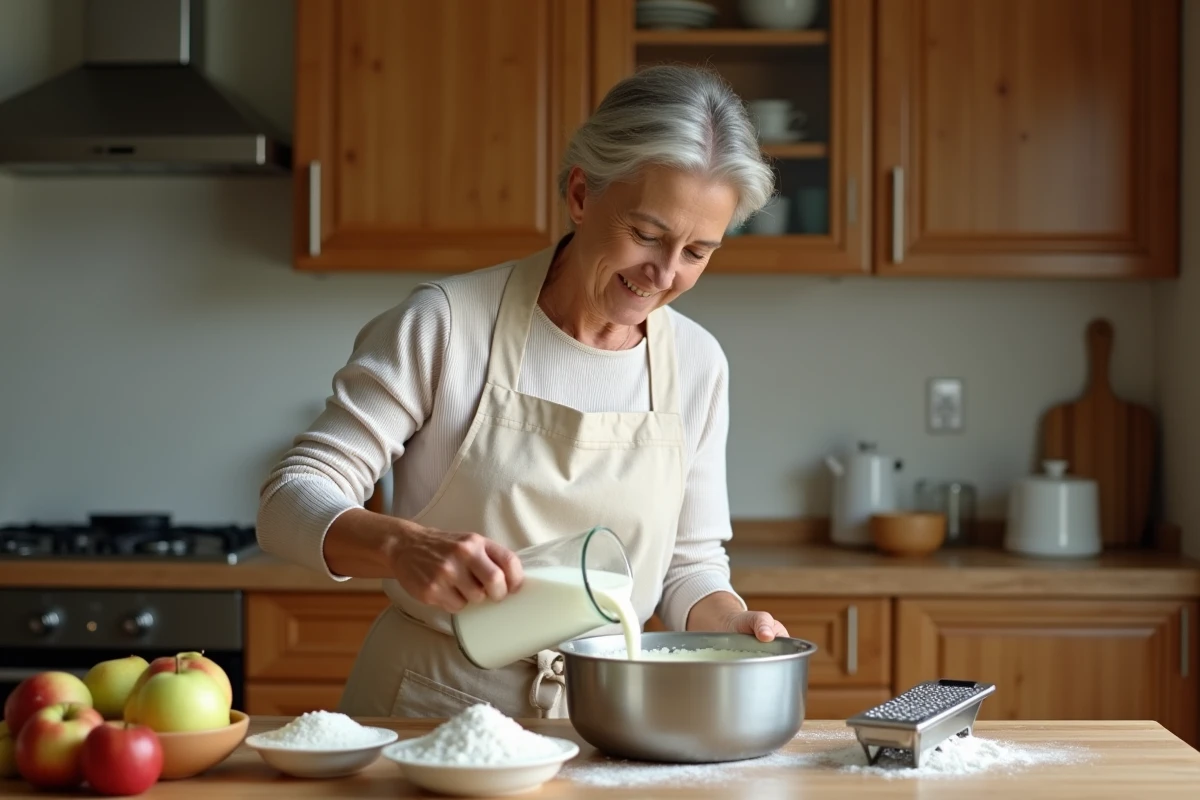
A version that can be prepared in a single bowl, like Cyril Lignac’s apple yogurt cake on Gourmand Sans Gluten, simplifies logistics without altering the fundamental proportions.
Apples in a yogurt cake: suitable varieties and cutting techniques
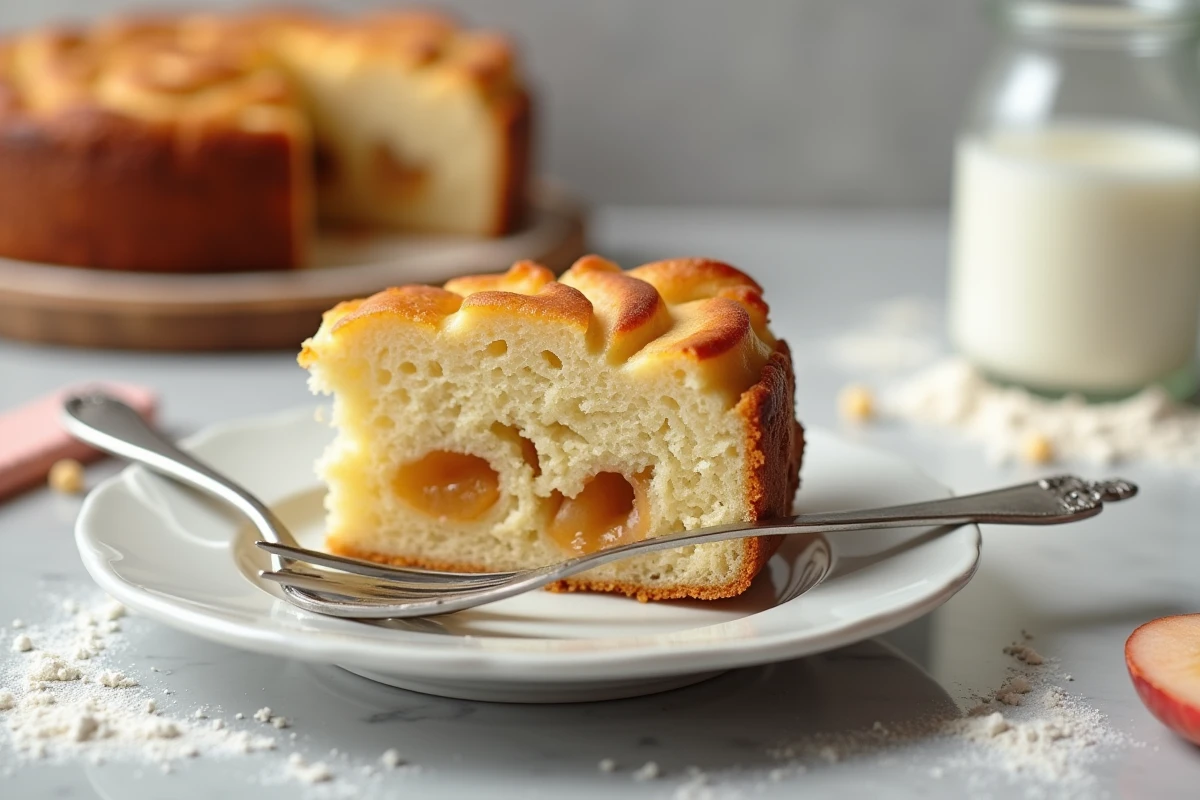
The choice of apple variety changes everything. Firm-fleshed apples (like golden or granny smith) hold their shape during cooking and create identifiable pieces in the crumb. Soft varieties (reine des reinettes, boskoop) break down and release their juice into the batter, resulting in a moister but less structured cake.
The way you cut the apples is just as important as the variety chosen. Slicing the apples thinly distributes them evenly. Cutting them into thick cubes concentrates the flavor in distinct pockets. The Cyril Lignac recipe favors visible pieces, arranged on top and within the batter.
- Firm-fleshed apples (golden, granny): hold their shape during cooking, contrasting texture with the soft crumb
- Soft apples (boskoop, reinette): partial dissolution in the batter, moister cake
- Unidentified seasonal apples: peel and taste raw before deciding on the cutting size
A often overlooked point: apples release water during cooking. If the batter is already very liquid (excess yogurt or added applesauce), the center of the cake may remain raw. Lightly draining the pieces or dusting them with flour before incorporating them helps mitigate this issue.
Lemon zest and vanilla: the flavors that change Cyril Lignac’s recipe
Cyril Lignac’s version stands out for the addition of lemon zest and vanilla sugar. These are not optional toppings. The lemon balances the sweetness of the creamy yogurt and the cooked apples. Without this acidity, the cake may taste bland despite the sugar.
The zest (not the juice) provides aroma without adding liquid. Finely grating the skin of an untreated lemon is sufficient. The vanilla sugar works with the melted butter to create a warm aromatic base that pairs well with the apple.
Cinnamon appears in many variations. It works, but it can easily overpower other flavors if used too liberally. A half teaspoon is enough for a standard mold. Beyond that, the cake takes on a gingerbread flavor that strays from the original recipe.
Baking and signs of success for a moist apple yogurt cake
Baking revolves around a medium temperature. If it’s too hot, the top burns before the center sets. If it’s too low, the cake spreads and doesn’t rise properly. A reliable indicator is the blade of a knife inserted in the center: it should come out with a few moist crumbs, not liquid batter.
Removing the cake when the blade is still slightly moist ensures lasting moistness. Baking continues for a few minutes in the hot mold. An overbaked apple yogurt cake loses the moisture provided by the fruits and yogurt, negating the benefits of these ingredients.
- Preheat the oven before baking, not while preparing the batter
- Place the mold in the center of the oven for even baking
- Do not open the door during the first two-thirds of baking
- Let it cool in the mold before unmolding onto a rack
The dessert keeps well under a clean cloth for one to two days. The moistness often improves the next day, when the moisture from the apples has evenly distributed throughout the crumb. It is a quintessential pantry cake, adaptable according to the season with pears or other available fruits.
Cyril Lignac’s recipe for the apple yogurt cake owes its reputation to a precise balance of fat, acidity, and fruit. Changing one parameter (type of yogurt, apple variety, amount of lemon) produces a different result, not necessarily a failure, but different. Understanding these variables allows for reproducing the desired moistness or intentionally adapting the recipe to one’s tastes.