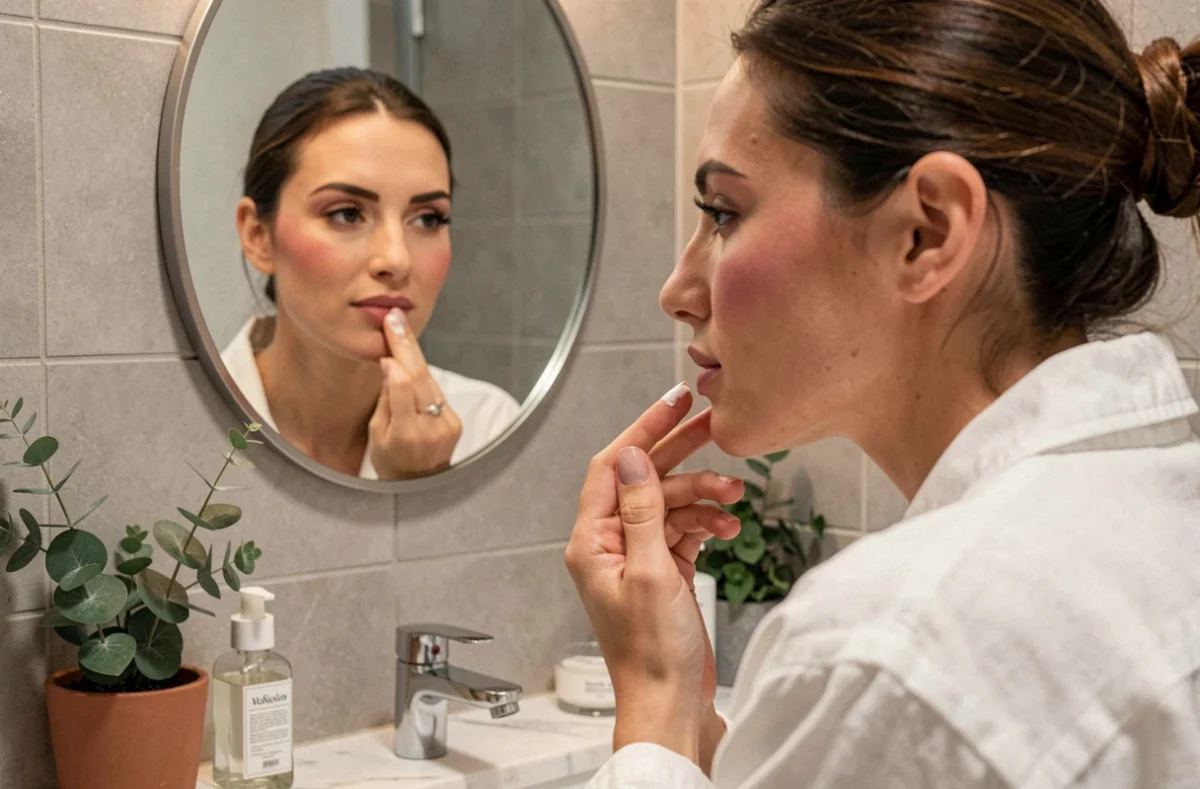
Since January 1, 2026, France has banned the use of PFAS in cosmetic products. This regulatory measure, still little communicated in mainstream beauty advice, reshapes the understanding of what it means to care for one’s skin and hair. Brands are reformulating, consumers are scrutinizing labels, and beauty routines are evolving under constraints that go beyond a simple preference for the “natural”.
PFAS and cosmetics: what the French ban changes concretely
PFAS, these fluorinated compounds long used for their smoothing and water-repellent properties in foundations, mascaras, or sunscreens, are now banned from cosmetic formulation in France. The regulation sets precise analytical thresholds: 25 parts per billion for an individual PFAS, 250 parts per billion for the sum of PFAS, or 50 parts per million for total fluorine, including polymers.
These thresholds may seem technical, but their impact is direct on products on the shelves. A long-wear foundation or a waterproof mascara that relied on PFAS for its durability must be reformulated or removed. The official control methods remain a point of regulatory clarification, meaning that the transition is not yet fully stabilized.
A product still available in stores may not have been manufactured after the ban came into effect. Previous stocks may still circulate. Checking the manufacturing date, and not just the expiration date, becomes a relevant reflex for those wishing to explore the entire beauty universe on univers-beaute.net in line with this new regulatory landscape.
Ingredient traceability: beyond the “natural” label
The word “natural” on a face care or hair product packaging is no longer enough to reassure. Consumer expectations are shifting towards a demand for traceability that encompasses the geographical origin of ingredients, cultivation or extraction conditions, and the social practices of supply chains.
This evolution changes the way one chooses a serum, a body oil, or a brow and lash treatment. Rather than relying on a generic mention, proof of environmental commitments takes precedence over the promise of naturalness. Some brands now publish the results of audits of their suppliers, while others detail the contribution of each ingredient to the carbon footprint of the finished product.
Field feedback varies on this point: not all brands have the same level of transparency, and smaller companies sometimes struggle to finance these traceability initiatives. The product price does not always reflect the rigor of the supply chain.
What the INCI list reveals
The INCI list (International Nomenclature of Cosmetic Ingredients) remains the most reliable tool for evaluating a product. A few reflexes can help analyze it better:
- Ingredients are listed in descending order of concentration: the first three or four constitute the bulk of the formula.
- A name ending in “-fluoride” or containing “perfluoro-” historically indicated the presence of PFAS, now banned in France.
- Active ingredients highlighted on the packaging (hyaluronic acid, niacinamide, retinol) often appear at the end of the list, indicating a low concentration but potentially sufficient to be effective.
Beauty product formats and environmental impact: choices that matter
Recent sector analyses highlight an often-overlooked angle in beauty advice: the product format weighs as much as the choice of ingredients in the environmental footprint of a routine. Refills, solid shampoo bars, and reducing packaging weight are among the most concrete levers.
The production of raw materials can represent the majority of the environmental impact of a cosmetic. A face cream packaged in a thick glass bottle is not automatically more virtuous than a lighter recycled plastic tube. The weight of the container, transport distance, and the actual possibility of recycling in the local supply chain come into play.
Beauty routine and waste reduction
Adopting a refillable format for makeup or face care mechanically reduces the amount of material thrown away. Some actions have a measurable effect:
- Replacing liquid shampoo with a solid bar eliminates the plastic bottle and reduces transport volume.
- Choosing a mascara or blush with a refill system avoids throwing away the mechanism and container with each replacement.
- Favoring concentrated products (serums, cleansers) decreases the proportion of water in the formula and thus the total weight shipped.
These choices are not about aesthetic minimalism. They respond to a logic of impact reduction that available data confirms, even if comprehensive comparisons remain rare and heavily depend on the local context of collection and recycling.

Daily routine and skin: adapting care to real constraints
Beauty trends come and go quickly, but the skin does not change its functioning from season to season. The skin barrier remains the central criterion for evaluating the effectiveness of a product, whether it is a cleanser, serum, or moisturizer.
Multiplying actives (retinol, exfoliating acids, vitamin C) in the same routine can weaken this barrier instead of strengthening it. Dermatologists generally recommend introducing one new active at a time and observing the skin’s reaction for several weeks before adding another.
The eye area, a fine and sensitive zone, illustrates this logic of caution well. Treatments for lashes and brows are gaining popularity, but formulas containing stimulating actives deserve a preliminary test on a small area. The skin around the eyes reacts more quickly and intensely than that of the rest of the face.
The ongoing reformulation of many products, linked to the ban on PFAS, may also change the texture or wear of makeup to which one was accustomed. Testing a reformulated product again rather than automatically repurchasing it is part of the concrete adjustments that this transition period imposes on any daily beauty routine.