
Between two brands, a size M can vary by several centimeters, while an L sometimes adopts radically different cuts depending on the manufacturer or country of origin. Size charts often display measurements that do not reflect the reality of the garment received.
Size errors are among the main causes of returns when shopping online. A simple misinterpretation of bust or waist measurements can make a garment uncomfortable or impossible to wear. Tolerance margins and hidden variations further complicate the choice.
Why sizes M and L are so confusing in fashion
Clothing size is a delicate balance between the brand, country of origin, chosen material, and applied cut. What is labeled M in Paris may resemble an S in New York, or fit like an L in Milan. Each manufacturer develops its own size guides, based on anthropometric measurement campaigns conducted on different audiences. The result: the consumer navigates blindly, faced with a multitude of charts and references that change from one store to another, from one site to another.
Several elements deserve close attention when choosing a garment:
- The material influences the final look: linen, known for its generous cut, may encourage going down a size; conversely, lycra, spandex, or elastane offer elasticity that allows for more freedom.
- The cut is crucial: for a fitted cut, precision is key; regular cut offers more comfort; oversized, the volume blurs the lines, especially between an M and an L.
In this context, consulting the size chart provided by each store has become a necessary step. But again, individual morphology comes into play: two people with the same bust measurement will not wear the same M with the same drape. Better understanding sizes M and L involves cross-referencing all this data: official guide, material, cut, and especially knowledge of one’s own silhouette. With the rise of e-commerce, where trying on disappears, vigilance becomes the best ally to avoid surprises upon unboxing.
How to take your measurements accurately: tips and practical advice
Before choosing a size, the essential step is to take precise measurements. A flexible measuring tape, graduated in centimeters, is a must. It should be positioned correctly, without being too tight or too loose. Several measurements should be taken to avoid unpleasant surprises:
- Bust measurement: the tape wraps around the widest part of the bust, usually at the level of the shoulder blades and nipples.
- Waist measurement: identify the narrowest part of the abdomen, just above the navel, without cheating by sucking in the stomach.
- Hip or pelvic measurement: measure at the widest point, often about 20 cm below the natural waist.
- Arm length and inseam: for shirts, jackets, pants, or long skirts, measure from the top of the shoulder to the wrist, or from the top of the thigh to the ankle.
Repeating each measurement at least twice limits the risk of error. This rigor prevents many failed purchases, especially since each brand adjusts its chart to its own standards. For children, guides take into account age and morphology; for babies, the lengthened measuring stick remains the reference.
A successful online purchase starts with reliable measurements. A size guide is never just a simple number: it reflects a morphology, a material, a cut, and a specific drape. Taking this time gives you the best chance to choose the right size, far from the disappointments of standardized ready-to-wear.
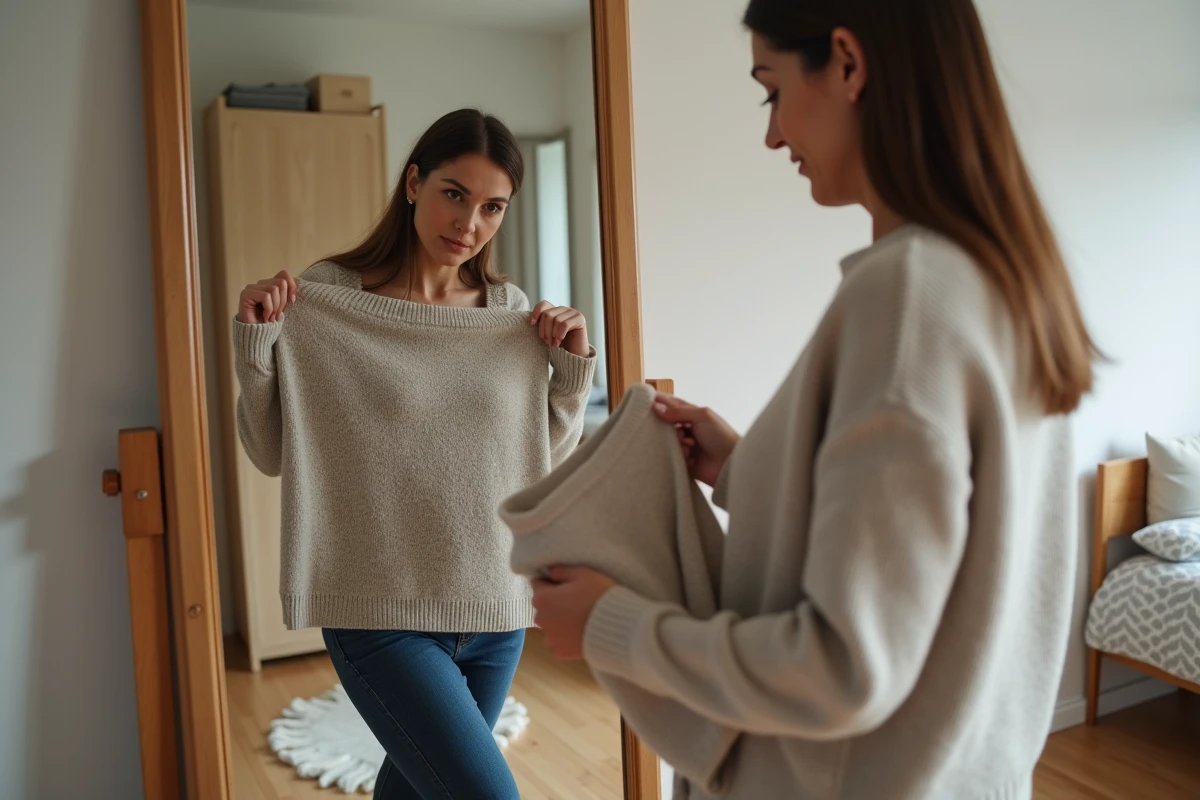
Choosing between M and L: what to really look at to avoid mistakes when shopping online
Faced with the uniformity displayed on labels, the reality of ready-to-wear reminds us that each M or L hides its share of subtleties. Behind a letter lies a range of variations: each brand relies on its own size guide, based on its measurement campaigns, its target audience choices, and its standards. From one country to another, from one fabric to another, the difference can appear unexpectedly.
Parameters to examine before adding to your cart
Before confirming an online purchase, several data points deserve examination:
- Always check the size guide on the site: it provides a detailed chart, usually in centimeters, for bust, waist, or hip measurements according to the garment.
- Analyze the cut: a fitted cut requires great precision, a regular cut allows for more ease, while an oversized cut plays with volume.
- Examine the material: linen tends to run large, lycra or elastane adds stretch, cotton requires a fitted cut to fall right.
- Consider your morphology: the size guide does not replace your own measurements. Bust, waist, hip: take the time to verify before each order, especially if you are changing brands.
Online shopping has greatly increased the number of returns, with the lack of trying on being a major factor. If doubt persists, customer service can often refine your choice, and some sites go so far as to compare multiple measurements for greater reliability. Between M and L, cross-referencing charts, material, cut, and morphology is the key to a successful purchase.