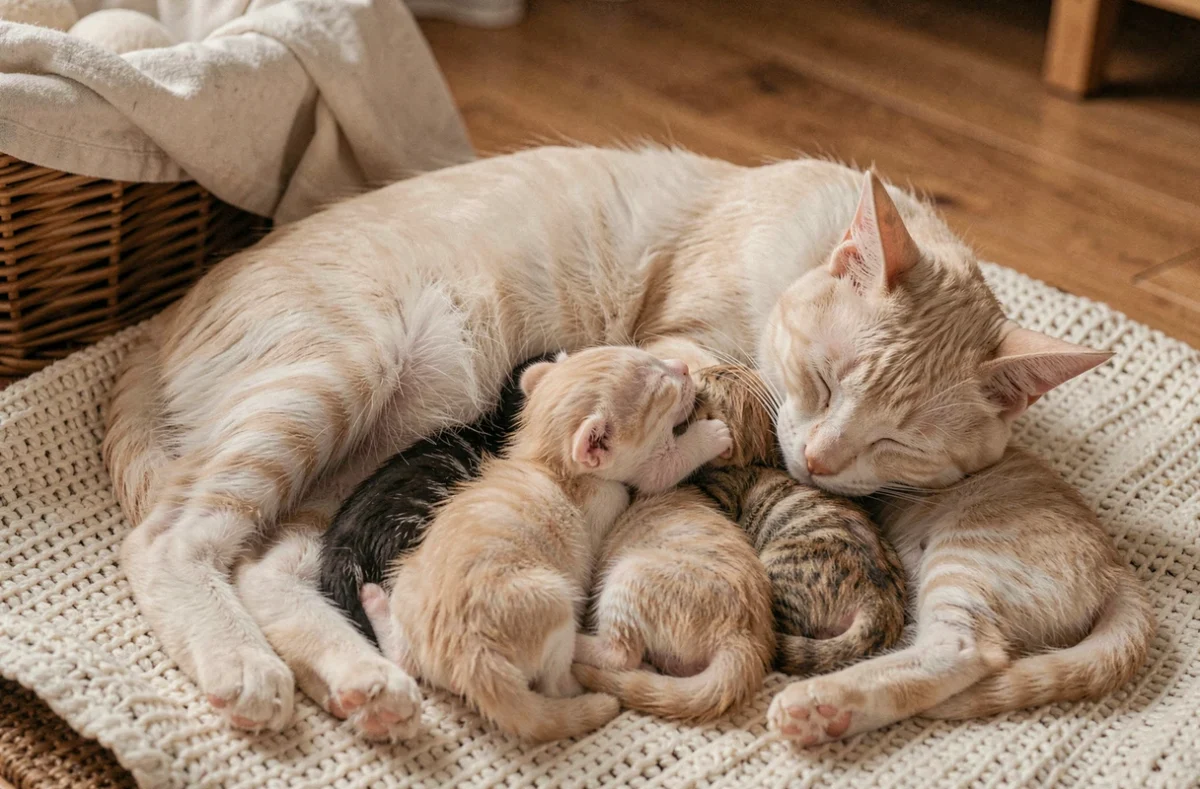
In France, the Rural Code sets a legal threshold for the transfer of a kitten at over eight weeks. This administrative threshold is often confused with the appropriate age for separation, while it only constitutes a regulatory floor. Veterinarians and behaviorists recommend waiting significantly longer to preserve the behavioral development of the kitten. Understanding the distinction between nutritional weaning, social weaning, and legal framework helps avoid mistakes with lasting consequences on the cat’s temperament.
French legal framework: what the Rural Code really says about the transfer of kittens
The legal wording deserves to be read precisely. The Rural Code prohibits transferring a kitten aged eight weeks or less: it must therefore be over eight weeks at the time of transfer. Many advertisements between individuals mention “from 8 weeks” as a green light, which is already a legal approximation.
Beyond age, two obligations apply even when the kitten is given away for free. The giver must have the animal identified at their own expense, and a veterinary certificate is required. Free transfer does not exempt any of these formalities.
The commitment and knowledge certificate must be signed at least seven days before the actual transfer. The kitten cannot therefore be handed over on the same day as the signing.
This reflection period adds to the minimum legal age, which mechanically pushes the actual departure date beyond nine weeks in most cases. To better understand how to separate a litter of kittens according to Passion Animaux, one must integrate these administrative constraints into the timing of the litter.
Nutritional weaning and social weaning of the kitten: two distinct timelines
Nutritional weaning starts early. From about the third week, kittens begin to show interest in solid food. By seven weeks, most are capable of feeding themselves independently. It is this nutritional weaning that historically set the benchmark of eight weeks in the collective mindset.
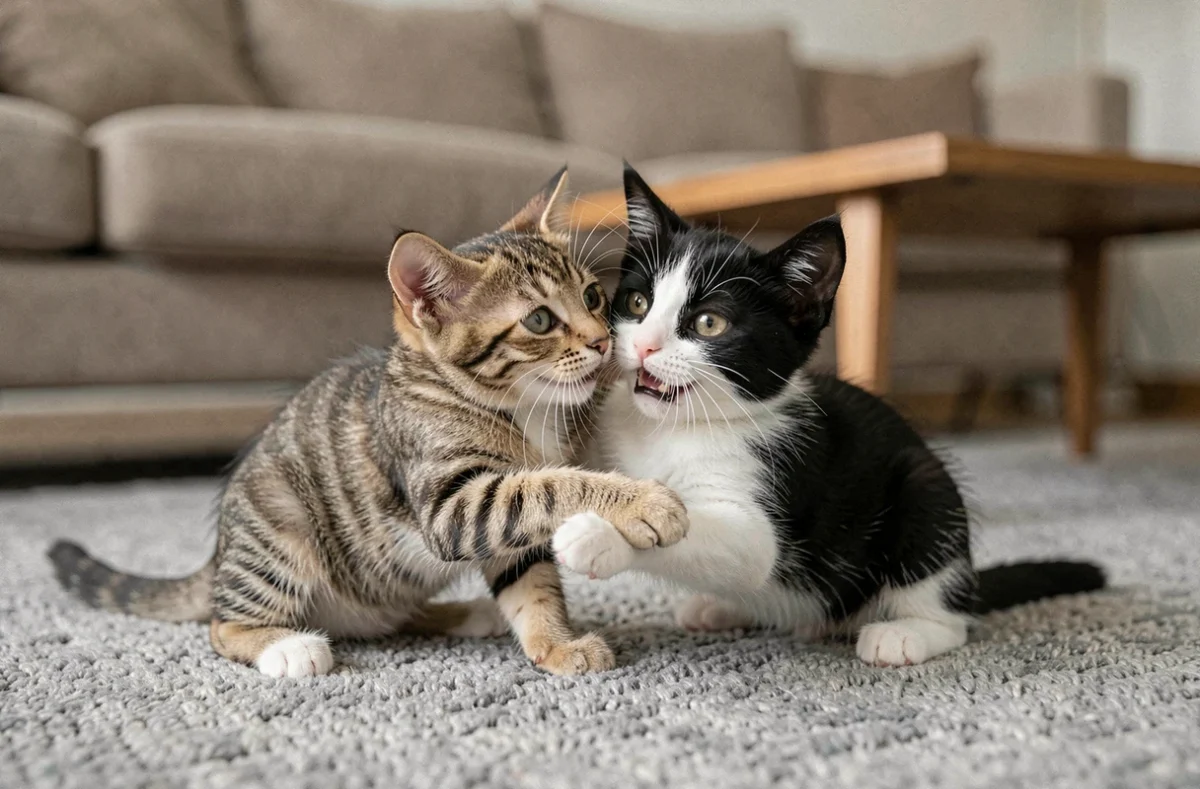
Social weaning, on the other hand, operates on a different and longer timeline. Between the fifth and fourteenth weeks, the kitten learns from its mother and siblings a set of behavioral codes: bite inhibition, frustration management, body communication. These learnings are not transmitted through food but through play, moderated conflicts, and observation of the adult cat.
- Bite inhibition is acquired when the mother pushes away a kitten that bites too hard during nursing or play, between the sixth and twelfth weeks.
- Frustration tolerance develops when the mother cat denies access to the nipples and the kitten must accept this refusal without aggression.
- Cleanliness is learned by imitation of the mother, generally acquired before the eighth week but reinforced in the following weeks.
A kitten taken away at exactly eight weeks has completed its nutritional weaning, but it is right in the middle of its social weaning. Interrupting it at this stage is akin to pulling a child out of school in the middle of a crucial term.
Early separation of the kitten: what behavioral studies show
A study published in 2017 in Scientific Reports, involving 5,726 cats, highlighted associations between the age of separation and certain behavioral disorders in adulthood. Cats separated before eight weeks exhibited more frequent behaviors of aggression, fear, and stereotypies (repetitive movements with no apparent function).
This study is based on questionnaires filled out by owners, rather than an experimental protocol where researchers would have chosen the age of separation. It therefore establishes correlations, not proven causal links. Other factors, such as the breeding environment or post-adoption socialization, may influence the outcome.

Despite this methodological limitation, the convergence of clinical observations and these epidemiological data leads the majority of veterinary behaviorists to recommend separation around twelve weeks. At this age, social weaning is considered sufficiently advanced for the kitten to have the behavioral foundations necessary for life in a human household.
Appropriate age to separate a kitten from its mother: the twelve-week window
The recommendation of twelve weeks as the appropriate age for separation is based on the intersection of several parameters. Nutritional weaning has been completed for several weeks. Most social learning with the litter and the mother has taken place. And the kitten remains young enough to easily adapt to a new home and new humans.
In the wild, feral kittens stay with their mother for about four months. The twelve-week benchmark for a domestic cat constitutes a compromise between this natural rhythm and the realities of adoption.
- Between eight and ten weeks: the kitten eats alone and uses its litter box, but its social codes are still fragile. Separation is legal but early from a behavioral standpoint.
- Between ten and twelve weeks: social learning consolidates. The kitten begins to manage conflicts with its siblings without escalation.
- Beyond twelve weeks: the kitten is well-equipped socially. Adaptation to the new home remains smooth, contrary to the common belief that an older kitten would bond less with its adopter.
The idea that a three-month-old kitten would be “too old” to bond with its owner is not supported by any published data. Cats adopted at twelve weeks or older develop attachment bonds comparable to those adopted earlier, with fewer reported behavioral issues by their owners.
What to do if the kitten was separated too early
Not all kittens separated before the recommended age automatically develop problems. The welcoming environment, the quality of human socialization, and the possible presence of another adult cat in the home play a compensatory role documented by practitioners.
A kitten that arrives too young and bites hard while playing, shows disproportionate fear reactions, or develops excessive attachment to its owner (constant meowing in their absence, sucking on fabrics) may benefit from behavioral veterinary support. These signals are not fixed personality traits but recoverable social learning gaps to some extent.
The presence of a balanced adult cat in the home can partially compensate for the absence of the mother, provided that this cat is tolerant of kittens. This is not always the case, and forcing cohabitation without caution can worsen the situation rather than resolve it. A veterinary behaviorist remains the best contact to assess each situation individually.