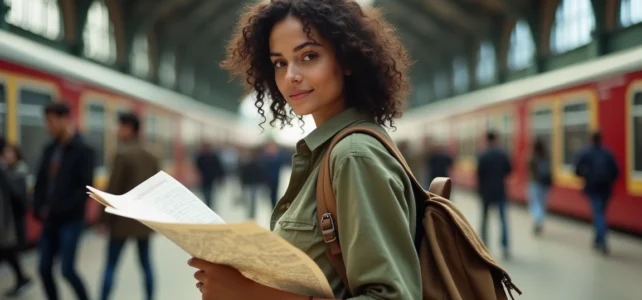
The solo female travel has ceased to be a niche. Searches related to solo travel for women have seen a spectacular rise in recent years, and the majority of American female travelers report having traveled alone. This quantitative progression masks a more nuanced reality: the concrete conditions under which a woman travels alone vary radically depending on the destination, budget, and tools at her disposal.
Digital security for solo female travelers: what apps really change

Since 2023, several mobile applications have integrated features designed for women on the move: real-time ride sharing, discreet alert buttons linked to local emergency services, contextual notifications about areas to avoid in certain cities. The use of these tools by solo female travelers has significantly increased.
This rise raises a question that few guides address: an app does not replace a comprehensive security strategy. An alert button loses its usefulness in an area without mobile network coverage. 4G coverage remains very uneven in Southeast Asia, Sub-Saharan Africa, or certain rural areas of Latin America.
Experienced female travelers generally cross-check several sources of information before arriving in a country. Ground reports diverge on this point: some view these apps as a psychological safety net rather than functional, while others deem them essential for nighttime city travel. The media Vagabondes collects testimonies from globetrotters detailing their actual practices on the ground.
Micro-communities of female travelers: a network parallel to traditional guides
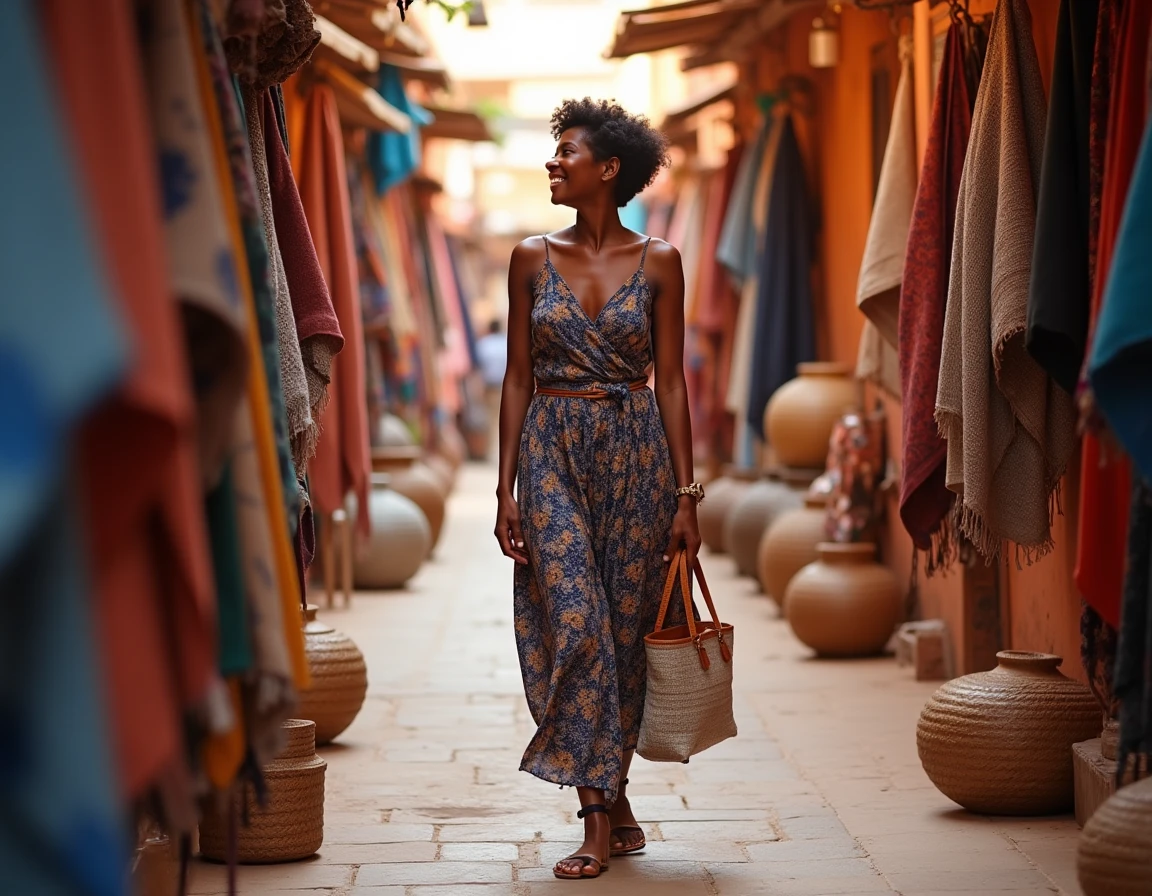
The resumption of international travel after the pandemic has accelerated a discreet phenomenon: the multiplication of local groups of female travelers, organized by city or neighborhood. These micro-communities operate via geolocated Telegram or WhatsApp groups, offering temporary co-housing, joint outings, or secure co-working.
This network is particularly dense in Europe and Latin America. These are not generalist forums, but closed networks where access is granted by co-optation or verification. A traveler arriving in Medellín, Lisbon, or Budapest can join a local group within hours and receive updated recommendations on neighborhoods, transportation, or accommodations.
What these communities provide that blogs do not cover
A travel blog, no matter how detailed, freezes information at the date of publication. A safe neighborhood in 2023 may no longer be so two years later. Local groups offer live information, updated by members present on-site.
However, the quality of these groups varies greatly. Some are very active with strict moderation rules. Others accumulate messages without verification, which can generate false alerts or outdated recommendations. Checking the date of the last message and the number of active members before trusting a group remains a reflex to acquire.
Accessibility and rights of travelers with disabilities
One aspect rarely addressed in women’s travel guides concerns the rights of female travelers with disabilities. In Europe, both residents and foreign tourists with disabilities benefit from specific rights, including EU nationals holding a European Disability Card.
These rights cover access to adapted transportation, exemptions from tourist tax in certain municipalities, and preferential rates for tourist sites. The available data does not allow for conclusions about the actual degree of implementation of these provisions in each member country, but the legal framework exists.
Preparing for a solo trip with a disability: friction points
- Airlines do not all apply the same rules for transporting wheelchairs or medical equipment, and claims for damages follow different procedures depending on the carrier
- Accommodations claiming to be accessible for people with reduced mobility do not always match reality (door widths, height of sanitary facilities, actual presence of an elevator)
- Standard travel insurance frequently excludes certain pre-existing conditions, requiring the purchase of additional coverage before departure
Destinations and safety: beyond simplistic rankings
Lists of “safest countries for women” circulate abundantly. They often rely on national indicators (overall crime rate, peace index) that do not reflect the reality experienced by a traveler in a specific neighborhood at a specific time.
A more operational approach is to cross-reference recent travelers’ feedback with consular alerts from the Ministry of Foreign Affairs. The country sheets from French consulates are regularly updated and distinguish between areas advised against and those under enhanced vigilance.
Rankings also do not take into account the type of travel. A woman on a hiking trip in northern Spain does not encounter the same situations as a backpacker using public transport in Southeast Asia. The mode of travel influences safety as much as the destination itself.
What experienced travelers check before leaving
- Mobile network coverage in the areas traveled through, to ensure the functioning of alert and geolocation apps
- The actual schedules of nighttime public transport, often reduced on weekends or in low season
- The existence of a French consulate or consular section in the city of stay, and its actual opening hours
- Local dress codes, not for conformity but to avoid unwanted attention in certain cultural contexts
Solo female travel is gaining media visibility, but concrete tools remain scattered among apps, private communities, and institutional resources. Assembling these different layers of information before each departure takes time. It is precisely this preparation work, more than the choice of destination, that determines the quality of the experience on the ground.