The length of a wedding isn’t a single, fixed figure. The gap between a civil ceremony that wraps up in a few minutes and a reception that goes on until dawn is so wide that an overall average tells you very little. What matters is the actual time guests spend between each part of the day, including travel and downtime.
Downtime between events: what guests really experience
A well-planned wedding isn’t necessarily a short one. It’s one without downtime guests are left to endure. Most schedules shared online list the main events (ceremony, cocktail hour, dinner) without accounting for the gaps guests have to fill in between.
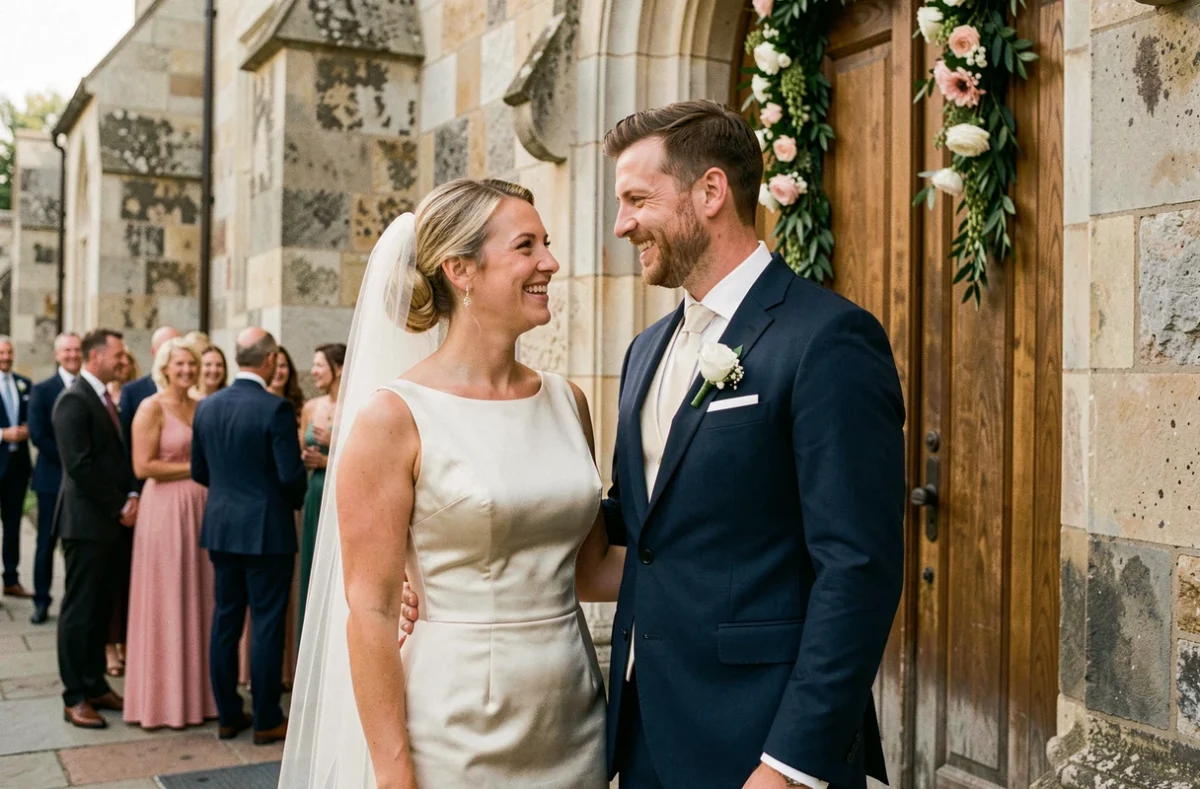
Take a typical schedule: a civil ceremony at the town hall, travel to the reception venue, cocktail hour, dinner, and dancing. Between leaving the town hall and the start of cocktail hour, you need to allow for photos outside the building, the convoy to the venue (which rarely runs smoothly), and guests arriving at different times. Guests often spend more than an hour between the town hall and their first drink.
This gap is rarely mentioned in sample schedules. It can be tiring, especially in summer, and disrupts the flow of the day, affecting the atmosphere at cocktail hour. If you add a religious or secular ceremony between the town hall and the reception, the gap becomes even longer.
When asking how long a wedding lasts, the useful answer isn’t one overall figure, but the total time spent at each event compared with the time spent waiting.
How long does a civil ceremony last? Administrative requirements and the reality of scheduling
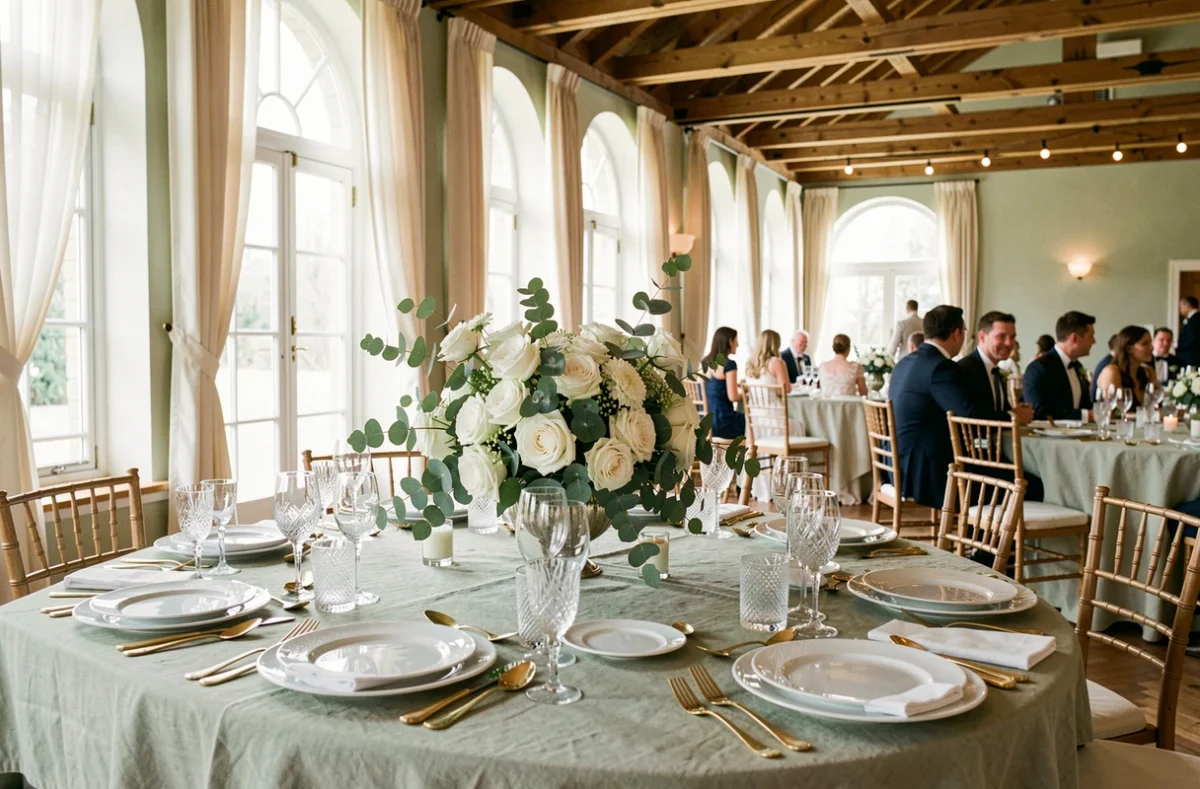
A civil ceremony lasts between fifteen and thirty minutes, including the reading of the relevant articles of the French Civil Code and the exchange of vows. This duration varies little from one town hall to another.
What does vary is the time allowed around the ceremony. The banns are published for ten days, and the wedding cannot take place before the tenth day after publication. In practice, the town hall assigns time slots based on availability, and on Saturdays, ceremonies may sometimes be scheduled back-to-back every thirty or forty-five minutes.
If a civil ceremony is followed by a religious ceremony on the same day, French law requires the civil ceremony to come first. The Diocese of Nanterre notes that the officiant may require a certificate of civil marriage.
We find that many couples underestimate the time needed between the two ceremonies. Allowing an hour between leaving the town hall and the start of the religious ceremony may seem generous, but once group photos, congratulations, and travel are factored in, that buffer quickly disappears.
Secular or religious ceremony: actual durations and their impact on the schedule
The length of a religious or secular ceremony depends directly on the format you choose and the number of planned contributions (readings, symbolic rituals, live music). In either case, this part of the day determines when guests arrive at cocktail hour.
A secular ceremony offers a degree of flexibility that a Mass does not. Shortening or extending it by ten minutes directly changes the start of cocktail hour and, in turn, the rest of the evening.
Key points to finalize for each ceremony format:
- Ceremonies held back-to-back on the same day (civil followed by religious): allow at least an hour and fifteen minutes between them, not just an hour, to account for convoy delays
- Outdoor secular ceremony: have a covered backup plan and add a fifteen-minute buffer, as seating guests takes longer without fixed benches
- Religious ceremony with Eucharist: the duration is difficult to negotiate, so schedule cocktail hour accordingly rather than cutting into the photo session
Cocktail hour and reception dinner: where time slips away
Cocktail hour is the most flexible part of the day. Planned for an hour and a half, it often runs over two hours. This usually happens for two main reasons: couple’s photos eat into the time slot, and guests arrive gradually, making it difficult to start serving.
An overlong cocktail hour pushes dinner back, shortens the dancing, and leaves guests tired before the main course. This is where most schedule delays build up.
A seated dinner with entertainment (speeches, slideshows, games) takes between two and three hours. A dinner without entertainment takes less than two hours, leaving more time for dancing but potentially making the meal feel rushed if the courses come out too quickly.
Here are the schedule items to prioritize:
- Couple’s photos: schedule them before cocktail hour (during a buffer slot) or just after the ceremony, never during cocktail hour, to avoid delaying service
- Speeches and entertainment: limit these to a maximum of three or four contributions during dinner, scheduled between courses, not before the starter
- First dance: schedule it after dessert and coffee, not after midnight, when some guests may already have left
- Wedding cake or show-stopping dessert: allow time for setup, which caterers often underestimate by ten to fifteen minutes

A wedding over several days: the next-day brunch changes everything
More and more couples are extending the celebrations with a brunch the next day. Usually starting around eleven, it wraps up around three or four in the afternoon. It doesn’t strictly extend the wedding itself, but gives everyone a second, more relaxed chance to get together.
A next-day brunch takes some of the pressure off the wedding day. Couples who know they’ll see their guests again on Sunday are more comfortable ending Saturday night earlier. This makes it easier to set a realistic end time—two or three in the morning—without anyone feeling disappointed.
How smoothly each part of the day flows into the next matters more than its total length. A long wedding with seamless transitions is less tiring than a shorter one punctuated by stretches with nothing to do. Focusing on the pace rather than the duration is still the best way to make sure the day lives up to expectations.