The bowler hat is distinguished by its rigid, rounded crown, which leaves no room for guesswork when it comes to size or material. Choosing a bowler hat to make a lasting part of your style means looking at its construction as well as its appearance: a model made for fancy dress and one designed for regular wear use different felt and hold their shape differently over time.
Wool felt or fur felt: how the material affects everyday wear
Product descriptions often mention “felt” without being more specific. The term covers two distinct materials that affect durability, appearance and how the hat performs in the rain.
| Feature | Wool felt | Fur felt (rabbit, hare) |
|---|---|---|
| Appearance | Matte, with a slightly grainy texture | Finer, with a slight sheen |
| Rain resistance | Absorbs moisture more quickly and dries slowly | More naturally water-resistant |
| Price range | Entry-level and mid-range | Mid-range and high-end |
| Care | Frequent brushing; prone to staining | More forgiving, develops a patina over time |
A fur felt bowler hat stands up better to the elements and holds its shape for longer. For regular outdoor wear, fur felt offers significantly greater durability. Wool felt is still a good choice for occasional or indoor wear, provided you’re prepared to give it more careful attention.
Several models and materials are listed at https://chapeaumelon.net, making it easy to compare materials before visiting a hatter.
Crown stiffness: telling an everyday bowler from a costume hat
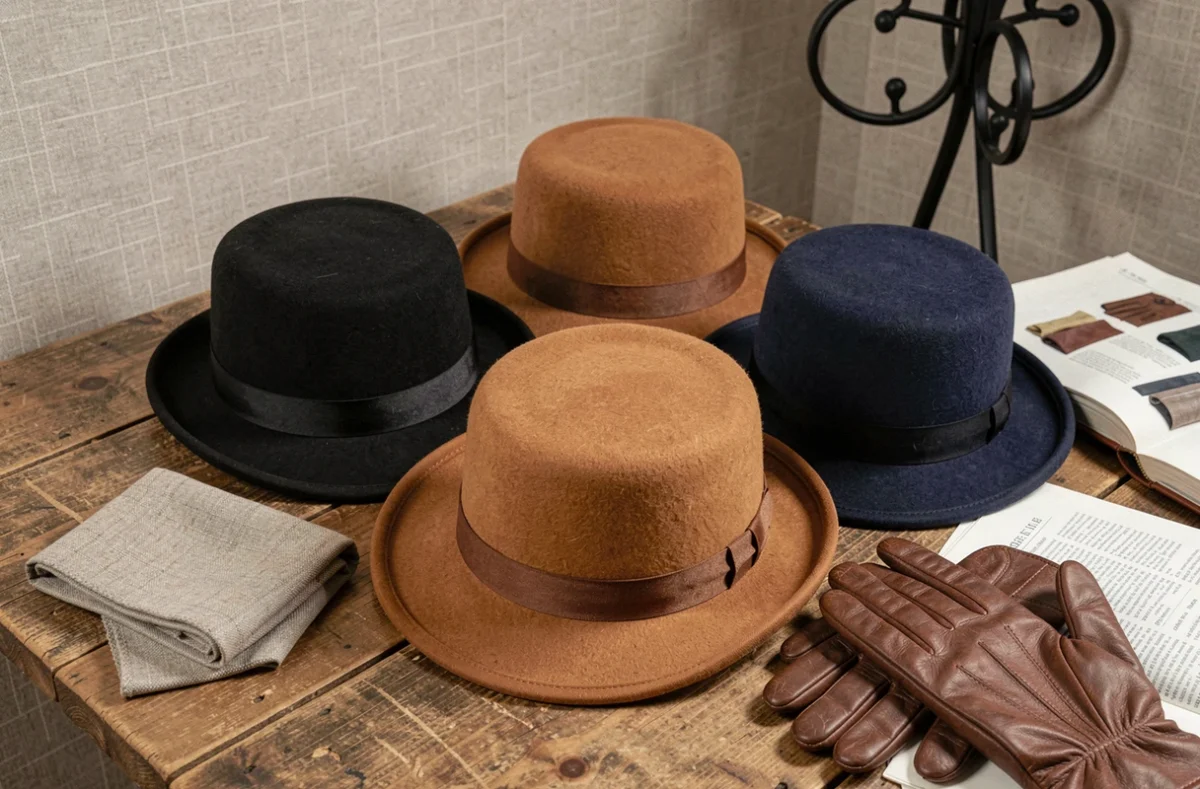
The bowler hat’s rounded crown has traditionally been rigid. This is not a flaw: it is part of the hat’s identity. The style was designed in 1849 for mounted gamekeepers, to protect them from low branches better than a top hat could.
A quality bowler hat holds its shape under light thumb pressure, then springs back into place. A low-end model, often made for fancy dress, deforms easily and does not recover its shape. You can feel the difference as soon as you try it on.
What to check in store or when your hat arrives
- Gently press the top of the crown: it should resist without caving in, then return to its original curve within a few seconds
- Check the inside of the hat: a leather sweatband or a lined fabric band indicates a model designed for lasting comfort, while a simple, narrow ribbon suggests basic construction
- Inspect the brim: an even rolled edge and a clean finish indicate careful workmanship, while an uneven edge points to quick industrial moulding
- Ask the hatter for care instructions specific to the model, as heat and moisture can alter the shape of a stiffened crown more easily than that of soft felt
A bowler hat that meets these criteria is made for everyday wear, not just for a themed party.
Size and face shape: the differences that matter
The bowler is a structured hat with a short brim. It frames the face more closely than a fedora or a Panama hat, making the right size especially important.
A bowler hat that is too small perches on the head and looks like a costume. If it is too large, it slips down over the ears and obscures the eyes. The right size sits just above the eyebrows without squeezing the temples or slipping at the slightest movement.
Face shape and crown height
A round face benefits from a slightly taller crown, which elongates the silhouette. An elongated face pairs better with a lower crown and a slightly wider brim, which helps balance the proportions.
Artisan makers often offer two or three crown heights for the same model. Comparing the heights while trying the hats on in profile reveals noticeable differences in appearance. A side mirror is more useful than a front-facing one for judging the overall effect.
Second-hand hats and repairs: assessing a vintage bowler before buying
The second-hand market offers quality felt hats at lower prices than new ones. Not every sign of wear is a deal-breaker, but it is important to distinguish cosmetic wear from structural damage.
An old bowler can often be freshened up with careful brushing or by replacing the grosgrain ribbon around the inside of the crown. These repairs are straightforward and inexpensive at a hatter’s.
However, a cracked crown or a permanently misshapen brim requires professional attention, and restoration can sometimes cost more than a new entry-level hat. Before ruling out an old hat, run your finger along the inside of the crown to check for cracks that are invisible from the outside.
What to look for in a second-hand bowler hat
- Whitish stains on the felt: sweat marks, often removable with gentle steam cleaning by a hatter
- Loose or stiffened inner ribbon: easy to replace, and doing so can also improve comfort
- A crown that sounds hollow when lightly tapped: a sign that the felt is still in good condition and properly stiffened
- A persistent musty smell: a sign of deep felt deterioration that is difficult to treat
An old bowler hat in good structural condition, reshaped by a hatter, offers just as much protection as a new model and has a patina that new felt lacks.
The bowler hat remains one of the few styles of headwear originally designed for durability before elegance. Check the felt, test the stiffness and choose a size that suits your face shape to tell a lasting accessory from a simple costume hat. The rest comes down to how you wear it, the angle and getting used to it.