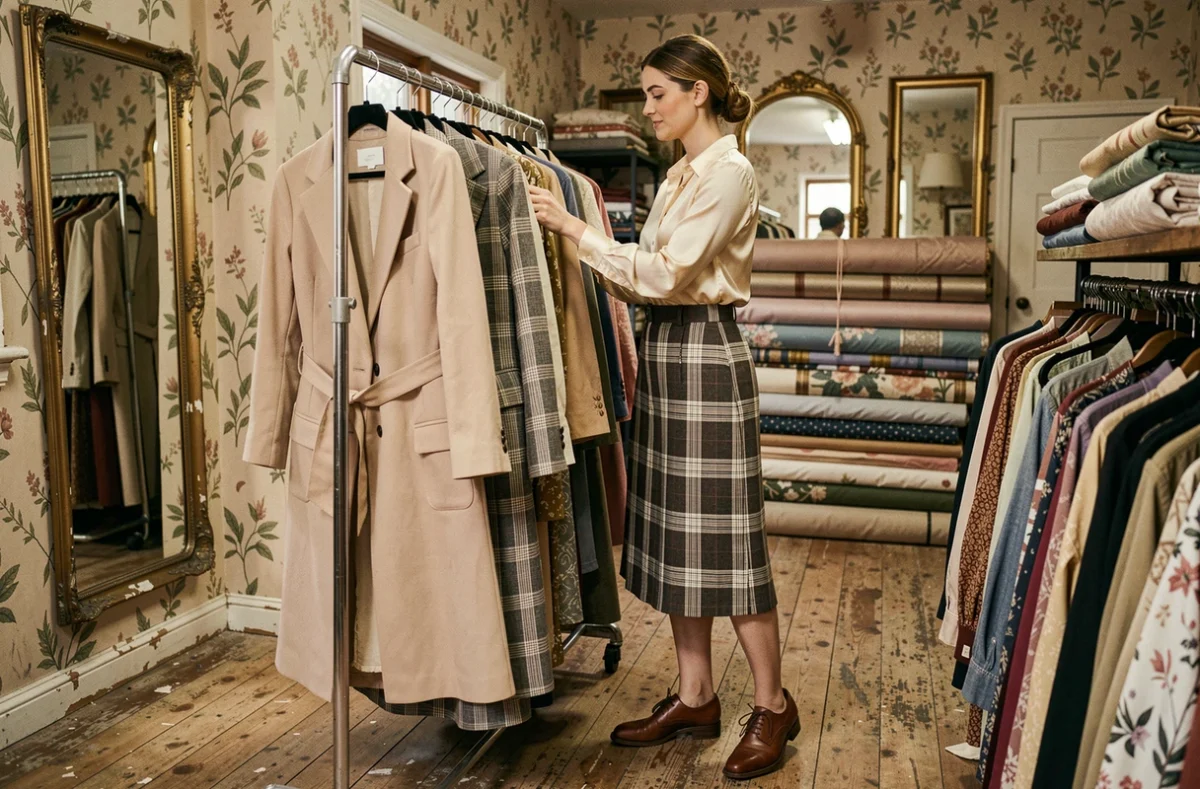
In fashion, the term “vintage” refers to a garment made at least twenty years ago. “Retro” describes a new piece that draws on the aesthetic codes of a bygone era. This distinction is more than a semantic detail: it affects the price, care requirements and durability of each piece in a wardrobe. Putting together a look inspired by the past means choosing between textile authenticity and modern practicality—sometimes within the same outfit.
Fragile vintage piece or modern reproduction: the real trade-off in a retro look
A garment’s age doesn’t prove it was better made. “Vintage” is not a quality label: a dress from the 1960s may have weakened seams, fabric worn thin by washing or a zipper that’s impossible to find at a haberdashery. Before buying, checking the seams, fastenings, any stains and the care label is the only reliable precaution.
Repairs to second-hand garments are still relatively uncommon in France. When a vintage piece needs specialist alterations (replacing a period metal zipper or repairing a silk lining, for example), the cost can exceed that of a new reproduction of comparable quality. The piece’s original condition matters more than its age, especially when it’s unclear whether repairs are feasible.
A contemporary reproduction is the sensible choice in several specific cases: when the original piece is too fragile for regular wear, when the period cut is no longer available in your size, or when it needs professional dry cleaning every time you wear it. Exploring retro looks from Renée Fashion can help you find retro-inspired pieces made from modern, washable fabrics and available in standardized sizes.
The trade-off comes down to this: save authentic vintage for sturdy, well-preserved pieces, and choose reproductions for wardrobe staples you wear every week.
Retro silhouettes by decade: choose an era before choosing a garment
Putting together a retro look without knowing a decade’s defining styles is like assembling pieces from different puzzles. Each period had its own signature silhouette, approach to the body and preferred fabrics.
1950s: defined waists and full skirts
The so-called “New Look” silhouette features a cinched waist and a flared skirt that falls below the knee. Period fabrics are often heavyweight cotton or gabardine. A modern reproduction—a flared midi skirt in cotton twill paired with a fitted blouse—captures the proportions without requiring a corset or stiff petticoat.
1970s: flowing shapes and geometric prints
Wide-leg trousers, wide collars and floral or geometric prints define this decade. 1970s vintage pieces are among the easiest to find in good condition, as the synthetic fibers of the era (polyester and nylon) hold up well over time. A period palazzo pant can still be worn as is if the side seams are intact.
1990s: minimalism and denim
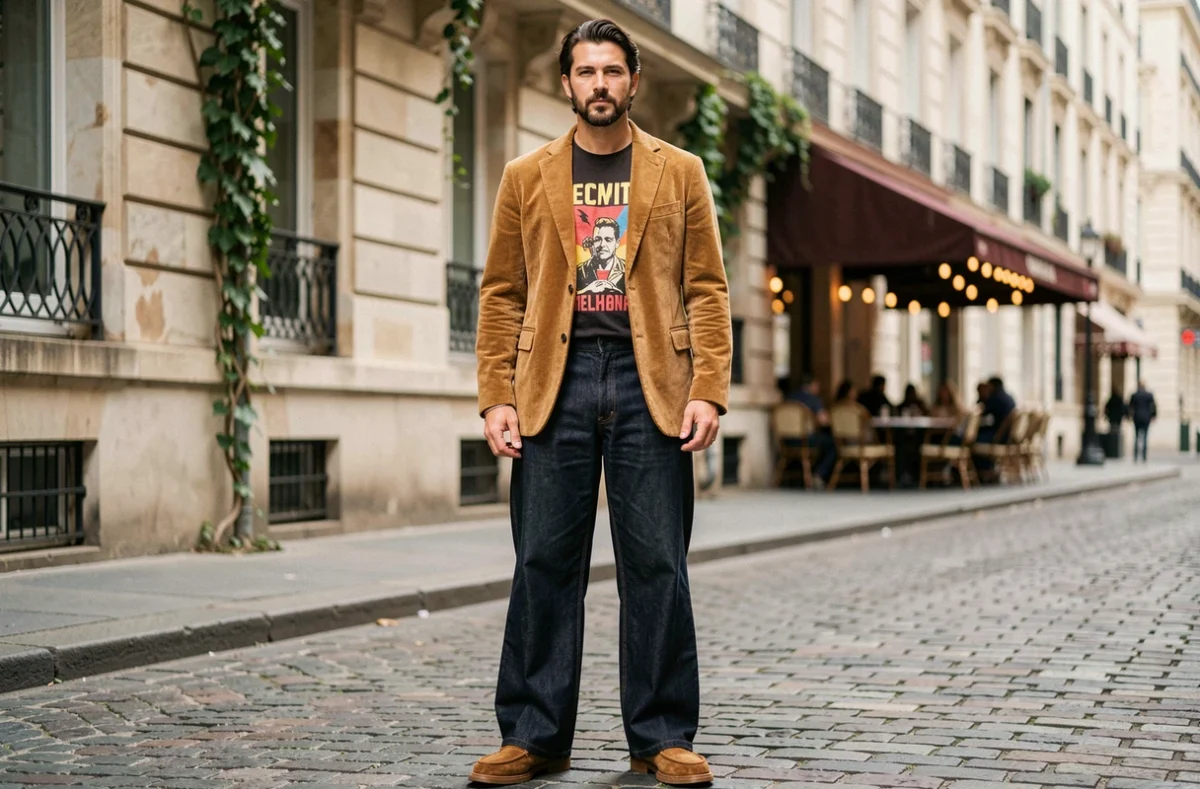
High-waisted jeans, a plain T-shirt tucked into the waistband and an oversized blazer make up the basic trio. 1990s pieces are relatively recent, so they’re often available in excellent condition on the second-hand market. 1990s denim offers good value for money and durability compared with pieces from other decades.
Where to shop for vintage: beyond online platforms
In France, second-hand shopping still largely takes place through brick-and-mortar channels. Thrift stores, flea markets, neighborhood clothing swaps and specialist consignment shops account for a significant share of transactions. Sticking to digital platforms means missing out on pieces that are never photographed or listed online.
Second-hand doesn’t always mean cheaper than entry-level new clothing. A vintage leather jacket in good condition can cost more than a new one from a mid-range brand, especially in urban thrift stores where demand drives prices up. Comparing condition, material and any restoration costs helps you avoid paying an authenticity premium without getting anything in return.
- Always check the seams under the arms and at the crotch, the areas most prone to wear on garments that have been worn.
- Check that fastenings are sturdy (buttons, zippers and snaps): having them replaced by a tailor can cost anywhere from a few euros to several dozen, depending on the piece.
- Smell the garment: a lingering musty or stale tobacco odor may require professional cleaning, adding to the purchase price.
- Look for stains before buying: some are impossible to remove from old natural fibers, even with treatment.
Retro accessories: the pieces that turn a basic outfit into a vintage look
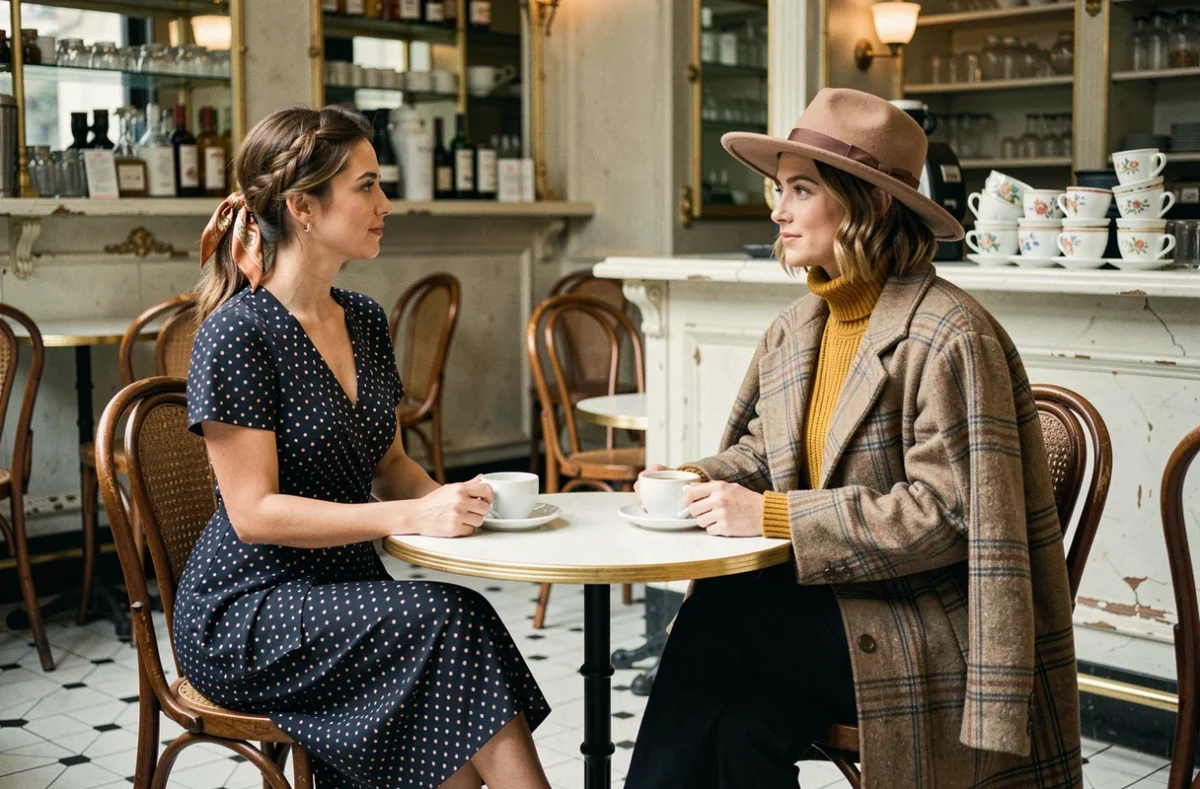
A well-chosen accessory creates a stronger retro effect than a mismatched head-to-toe vintage look. Accessories are also the easiest pieces to find in good condition, as they’re often worn less than clothing.
A silk scarf tied around the neck or in the hair evokes the 1950s without changing the silhouette. A structured bag with a metal clasp instantly gives an outfit a retro feel. Thick-framed sunglasses (such as cat-eye or oversized round styles) work with most decades.
- A wide belt worn at the natural waist recreates 1950s proportions with a contemporary straight-cut dress.
- A vintage brooch on a blazer lapel: lightweight, not very fragile and easy to find for a few euros at a flea market.
- Round-toe shoes with block heels: a versatile silhouette that works with everything from preppy style to 1960s mod-inspired looks.
The guiding principle is to keep the era consistent. Pairing a pin-up bandana with 1980s hoop earrings and grunge ankle boots in the same outfit looks more like a costume than a deliberate style. Limiting each outfit to references from one or two decades creates a look that’s easy to read and wear every day.
The difference between a successful retro look and a costume often comes down to one thing: how many period pieces the outfit contains. One or two vintage (or retro-inspired) pieces paired with contemporary neutral basics are enough to create the desired effect, without turning your wardrobe into a textile museum that’s difficult to care for.